
Mazda Cabin Air Filter Replacement
The cabin air filter is the one every occupant of the car has a stake in: it is what the air coming through the vents passes through. Mazda schedules it at 30,000 miles or 24 months on ten of the twelve 2026 models. Two models do not have one, and that is worth knowing before anyone quotes you for it.
What the Filter Change Covers
A genuine Mazda element, fitted the right way round, with the housing checked.
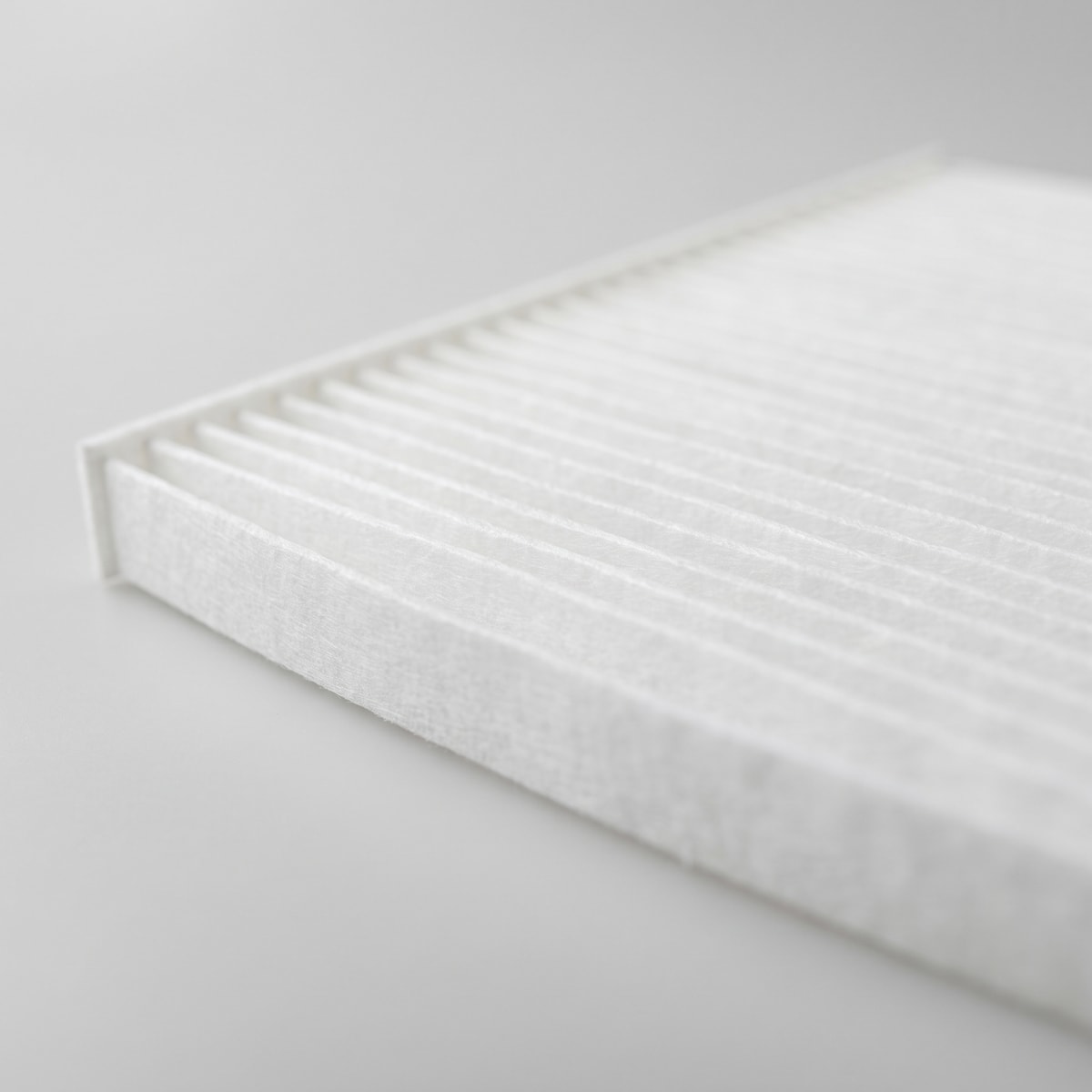
Matched to your model
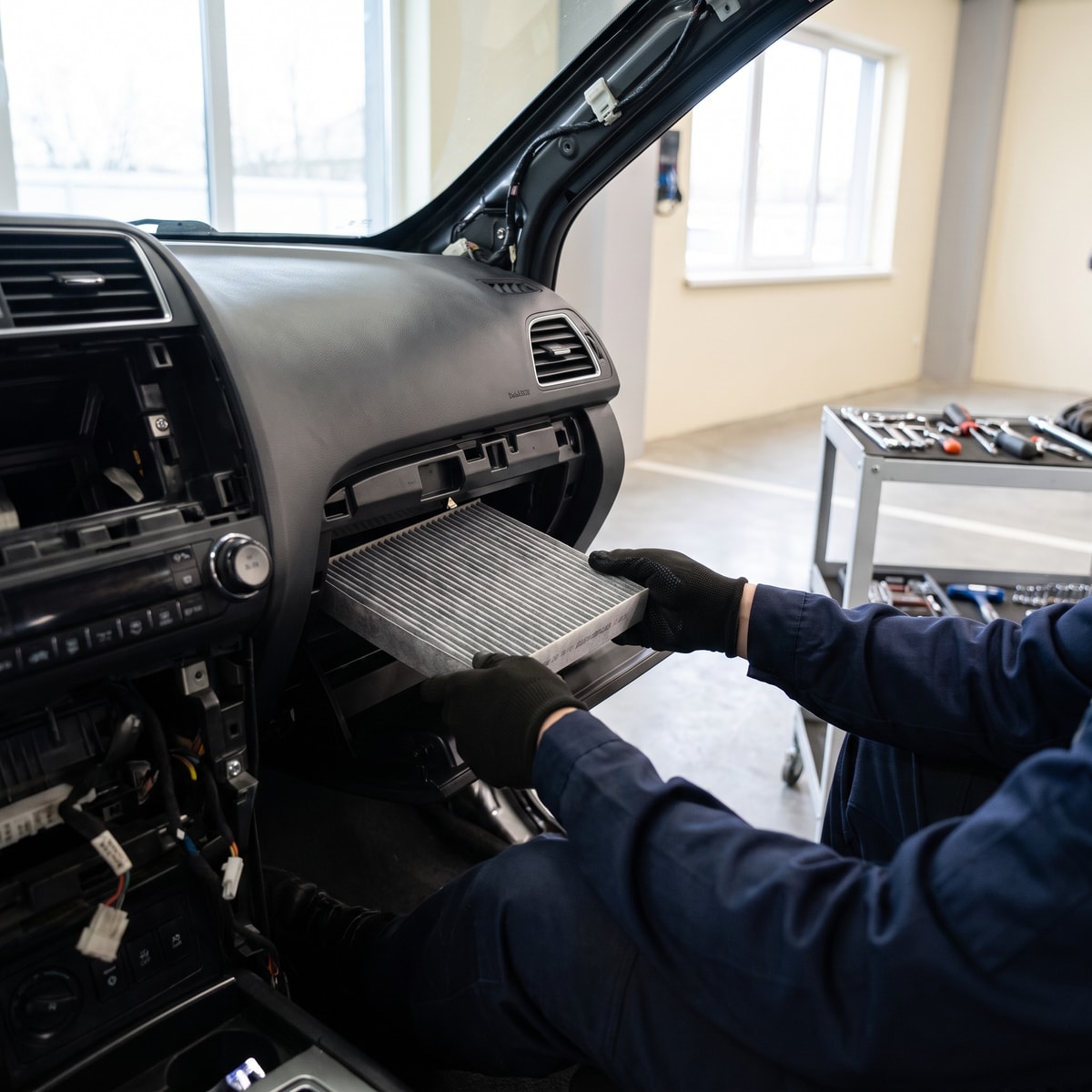
Behind the glovebox, on most models

Cleared before the new filter seats
Ten Models Yes, Two Models Never
One figure, one exclusion and one gap Mazda leaves open. All three are worth stating.
Sourced from the Scheduled Maintenance section of each model’s 2026 Mazda owner’s manual. Your own manual is the authority for your vehicle; bring the mileage and our team will read the table with you.
The Part and the Timing
What the filter is, what it is not, and why the calendar usually wins.
The Same Part as a Pollen Filter
Cabin air filter and pollen filter are two names for the same element on a Mazda. If you searched for one and landed on the other, you are in the right place — see the pollen filter page.
Not the Engine Air Filter
The engine air filter is a different part on a different interval: 30,000 miles or 36 months on the same ten models, and 37,500 miles or 3 years on the MX-5 pair.
Why 24 Months Usually Governs
A cabin filter collects what the fan pulls through it whether the car is moving or not, and Mazda’s 24-month limit is shorter than the 36 months it allows the engine filter. On average annual mileage the calendar arrives first.
Genuine Mazda Elements
Fitted to the specification the car was built with, so the airflow through the climate system is what the blower was designed around.
Does Pollen or Humidity Shorten the Interval?
Mazda publishes no severe cabin filter interval on any model, so the answer from Mazda is no. Here is what Mazda’s severe conditions do govern, so you can see where the filter sits relative to them.
Eight Models: No Weather Condition at All
On the Mazda3 Sedan, Mazda3 Hatchback, CX-30, CX-50, CX-70, CX-70 Plug-In Hybrid, CX-90 and CX-90 Plug-In Hybrid, Mazda lists three severe-driving conditions: extended idling or low-speed operation, driving mainly on unpaved or dusty roads, and driving mainly on mountain or uphill roads. Heat, humidity and rain are not on the list. If none of those describes how you drive, Mazda’s normal schedule is the one for your car.
CX-50 Hybrid: A Fourth Condition, for Load
The CX-50 Hybrid carries the same three conditions plus one more, and it is about load rather than weather: a heavily loaded vehicle — towing a trailer, using a camper, using a car-top carrier. Mazda maps that fourth condition to the transmission fluid and both differential oils, inspected at 20,000 miles and replaced at 40,000 miles, and not to the oil.
CX-5: Humidity Counts, Item by Item
The CX-5 is the one model where Mazda maps each severe condition to specific items rather than to the whole car. Extremely humid climates and extensive brake use move the brake fluid to annual replacement; short trips, extreme heat and heavy rain move the drive belt inspection to every oil change. Mazda triggers the 5,000-mile oil interval only from prolonged idling, unpaved or dusty roads and sustained mountain driving.
MX-5 Miata and MX-5 Miata RF: Schedule 2
These two work differently again. Mazda lists nine severe conditions and any one of them moves the car to Schedule 2 in full — and extremely hot conditions, extremely humid climates and repeated short-distance driving are all on that list. Schedule 2 brings 5,000-mile tire rotations, 5,000-mile brake inspections and 30,000-mile manual transmission oil. The oil itself stays on the flexible wrench-indicator interval unless the car is idled heavily or driven in dust.
Mazda Cabin Air Filter Replacement by Model
Mazda Cabin Air Filter Replacement Near Mobile, AL
Dean McCrary Mazda replaces Mazda cabin air filters with genuine Mazda parts at our service department on the I-65 Service Road in Mobile.
The Interval, and Who It Applies To
Every 30,000 miles or 24 months on the Mazda3 Sedan, Mazda3 Hatchback, CX-30, CX-5, CX-50, CX-50 Hybrid, CX-70, CX-70 Plug-In Hybrid, CX-90 and CX-90 Plug-In Hybrid. The MX-5 Miata and MX-5 Miata RF have no cabin air filter at all, which makes them the only two models in the lineup this service does not apply to.
The Time Limit Is the One That Usually Arrives
Mazda pairs the mileage with a 24-month limit, and most drivers reach two years before 30,000 miles. That is why a filter can be well past due on a car that looks low-mileage.
Mazda Cabin Air Filter Replacement Questions
How often should a Mazda cabin air filter be replaced?⌄
Every 30,000 miles or 24 months, whichever comes first, on the Mazda3 Sedan, Mazda3 Hatchback, CX-30, CX-5, CX-50, CX-50 Hybrid, CX-70, CX-70 Plug-In Hybrid, CX-90 and CX-90 Plug-In Hybrid. Mazda prints that as a sentence rather than deriving it from the table, so it is one of the more precisely stated figures in the schedule.
Do the MX-5 Miata and MX-5 Miata RF have a cabin air filter?⌄
No. The phrase appears nowhere in their owner’s manual — not in either schedule, not in the maintenance chapter and not in the index. There is no part and no interval for those two models.
Is a cabin air filter the same as a pollen filter?⌄
Yes, on a Mazda they are the same element under two names. The pollen filter page answers the same question from the other direction.
Should I change it more often because of pollen here?⌄
Mazda publishes no severe cabin air filter interval for any model, so there is no shorter Mazda figure to quote. What we can do is show you the old element; if we suggest a shorter cycle than Mazda’s, that is our recommendation rather than Mazda’s schedule.
