
Mazda Diagnostics
Diagnostics is not on Mazda’s maintenance schedule and should not be sold as though it were. What Mazda does build in is a vehicle status monitor and a wrench indicator that comes on before the maximum interval is reached — so the car asks for attention, and the job is to find out what it is asking for.
What the Diagnostic Visit Covers
A fault is a question, and the visit is about answering it rather than working through a checklist.
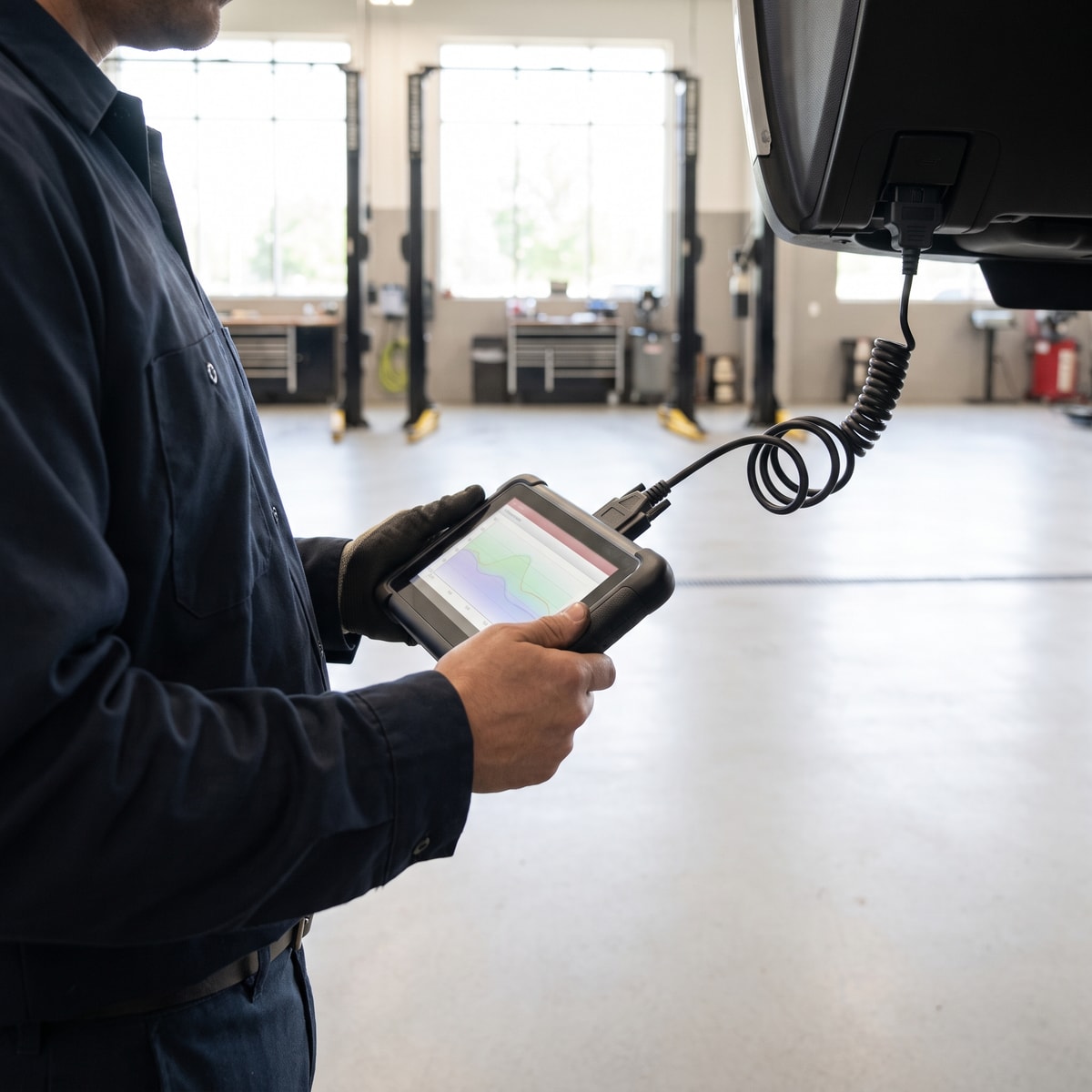
The scan tool Mazda specifies
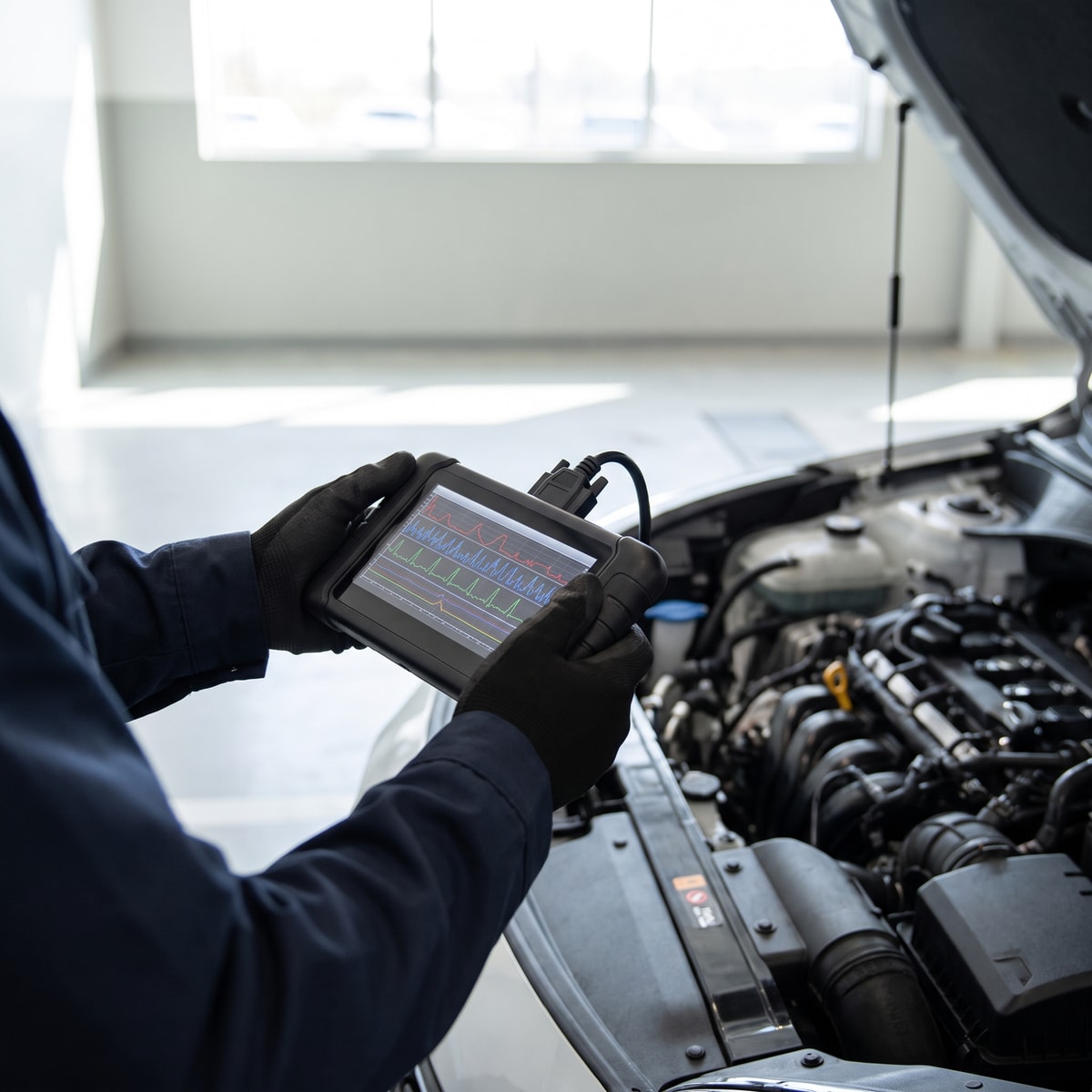
Not just the engine light

What was found, and what it means
Not a Schedule, a Question
What Mazda publishes around diagnostics, and what it deliberately does not.
Sourced from the Scheduled Maintenance section of each model’s 2026 Mazda owner’s manual. Your own manual is the authority for your vehicle; bring the mileage and our team will read the table with you.
What the Car Tells Us
Three things Mazda builds in, and one thing we do alongside them.
The Vehicle Status Monitor
Mazda uses it across this lineup to track the maintenance interval. Its instruction on the CX-5 is that every maintenance must be done when the display or wrench indication comes on.
The Engine Oil Data Reset
Mazda repeats a note on nine of the twelve models: reset the engine oil data whenever the engine oil is replaced, regardless of whether the message or wrench indicator was showing. A monitor that was not reset will mislead you.
Open Campaigns
A vehicle identification number check against Mazda’s open campaigns costs nothing and sometimes answers the question outright. Check yours before you book.
Setting the Monitor for Severe Use
There is one place where severe driving and the monitor meet, and it is worth knowing: Mazda instructs that if you are following the severe schedule, the vehicle status monitor is set manually. Here is what qualifies.
Eight Models: No Weather Condition at All
On the Mazda3 Sedan, Mazda3 Hatchback, CX-30, CX-50, CX-70, CX-70 Plug-In Hybrid, CX-90 and CX-90 Plug-In Hybrid, Mazda lists three severe-driving conditions: extended idling or low-speed operation, driving mainly on unpaved or dusty roads, and driving mainly on mountain or uphill roads. Heat, humidity and rain are not on the list. If none of those describes how you drive, Mazda’s normal schedule is the one for your car.
CX-50 Hybrid: A Fourth Condition, for Load
The CX-50 Hybrid carries the same three conditions plus one more, and it is about load rather than weather: a heavily loaded vehicle — towing a trailer, using a camper, using a car-top carrier. Mazda maps that fourth condition to the transmission fluid and both differential oils, inspected at 20,000 miles and replaced at 40,000 miles, and not to the oil.
CX-5: Humidity Counts, Item by Item
The CX-5 is the one model where Mazda maps each severe condition to specific items rather than to the whole car. Extremely humid climates and extensive brake use move the brake fluid to annual replacement; short trips, extreme heat and heavy rain move the drive belt inspection to every oil change. Mazda triggers the 5,000-mile oil interval only from prolonged idling, unpaved or dusty roads and sustained mountain driving.
MX-5 Miata and MX-5 Miata RF: Schedule 2
These two work differently again. Mazda lists nine severe conditions and any one of them moves the car to Schedule 2 in full — and extremely hot conditions, extremely humid climates and repeated short-distance driving are all on that list. Schedule 2 brings 5,000-mile tire rotations, 5,000-mile brake inspections and 30,000-mile manual transmission oil. The oil itself stays on the flexible wrench-indicator interval unless the car is idled heavily or driven in dust.
Mazda Diagnostics Near Mobile, AL
Dean McCrary Mazda diagnoses Mazda vehicles at our service department on the I-65 Service Road in Mobile, using Mazda’s own service information for your model.
Mazda Schedules No Diagnostic Interval
There is no scan row in any 2026 Mazda maintenance table in this lineup. What there is instead is a set of inspections at every service — lights, tire pressure and wear, brake fluid level, coolant level, disc brakes — and a wrench indicator that asks for attention when the car decides it is time.
A Warning Light Is Not Always a Fault
On the CX-5 Mazda states plainly that the wrench indicator comes on before the maximum interval is reached. On the MX-5 Miata and MX-5 Miata RF it is the oil interval itself. Knowing which light you are looking at saves a diagnosis you did not need.
Mazda Diagnostics Questions
How often should a Mazda have a diagnostic check?⌄
Mazda schedules none. There is no diagnostic scan row in any 2026 Mazda maintenance table in this lineup. A scan answers a question — a light, a noise, a change in behaviour — and is worth doing when there is one.
What does the wrench light on my Mazda mean?⌄
It is Mazda’s service reminder rather than a fault light. On the CX-5, Mazda states it comes on before the maximum interval is reached and that maintenance should be carried out when it appears. On the MX-5 Miata and MX-5 Miata RF it is the oil interval itself, with a 12-month or 7,500-mile ceiling.
Why did the reminder come back after my oil change?⌄
Because the engine oil data was probably not reset. Mazda repeats that instruction on nine of the twelve models: reset it whenever the oil is replaced, whether or not the indicator was showing.
Is a diagnostic included in a service?⌄
The inspections Mazda schedules are, and they cover a great deal. A fault-finding diagnosis for a specific symptom is separate work; current service offers are on the service offers page.
