
Mazda Oil Change
Genuine Mazda parts, the oil viscosity your engine actually calls for, and the interval Mazda prints for your model rather than a number borrowed from someone else’s. Ten of the twelve 2026 Mazda models are scheduled at 10,000 miles or 12 months; the MX-5 Miata and MX-5 Miata RF are not, and the CX-50 Hybrid does not take the same oil as the car beside it.
What the Oil Change Covers
Engine oil and the oil filter, replaced together, with genuine Mazda parts and the viscosity Mazda specifies for your engine. Mazda schedules the two as one item — there is no version of this service in the manual where the filter stays on.

Full synthetic, to your engine
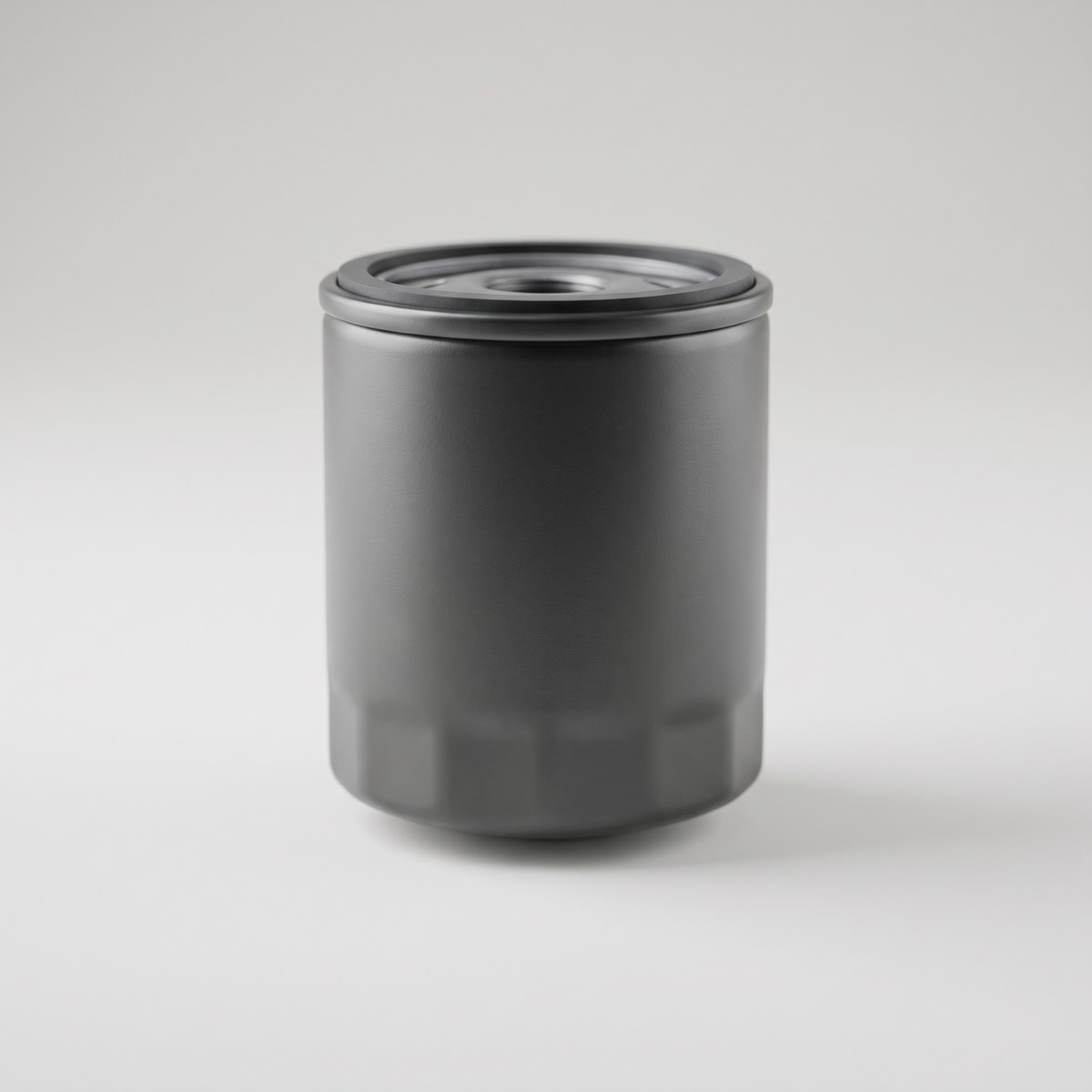
Replaced with the oil, every time

Not guessed by hand
How Often, by Model
There is no lineup-wide Mazda oil interval, and quoting one is the most common way this answer goes wrong. Mazda prints a scheduled maintenance table per model; these are those tables, from the 2026 owner’s manuals.
Sourced from the Scheduled Maintenance section of each model’s 2026 Mazda owner’s manual. Your own manual is the authority for your vehicle; bring the mileage and our team will read the table with you.
Which Oil Your Mazda Takes
Three viscosities across the current lineup, set by engine rather than by badge — which is why four models take two different oils depending on which engine is under the hood.
SAE 0W-20
The CX-5, CX-70, CX-70 Plug-In Hybrid, CX-90, CX-90 Plug-In Hybrid, MX-5 Miata and MX-5 Miata RF, plus the SKYACTIV®-G 2.5 versions of the Mazda3 Sedan, Mazda3 Hatchback, CX-30 and CX-50. Mazda’s wording is that Mazda Genuine 0W-20 Oil is required to achieve optimum fuel economy, and that the oil should be certified for gasoline engines by the American Petroleum Institute.
SAE 5W-30
The SKYACTIV®-G 2.5T versions of the Mazda3 Sedan, Mazda3 Hatchback, CX-30 and CX-50. Same badge on the tailgate, different oil in the sump — and a different spark plug interval to go with it. If you are not certain which engine you have, the paperwork or our service team can settle it in a minute.
SAE 0W-16 — CX-50 Hybrid Only
The CX-50 Hybrid is the only 0W-16 application in the Mazda lineup. Mazda adds a substitution rule that appears nowhere else in the family: if SAE 0W-16 is not available, SAE 0W-20 may be used, but it must be replaced with SAE 0W-16 at the next oil change.
How Much It Holds
Capacity varies as widely as viscosity. The CX-70 and CX-90 take approximately 6.0 L (6.3 US qt) with an oil filter replacement; the CX-5 takes approximately 4.5 L (4.8 US qt) and the CX-50 Hybrid approximately 4.3 L (4.5 US qt). Your model’s service pages and your owner’s manual carry the figure for your car.
Does Gulf Coast Driving Shorten the Interval?
For most of the lineup, Mazda’s own documents say it does not. This is worth stating plainly, because the opposite is assumed so often.
Nine Models: No Weather Condition at All
On the Mazda3 Sedan, Mazda3 Hatchback, CX-30, CX-50, CX-70, CX-70 Plug-In Hybrid, CX-90 and CX-90 Plug-In Hybrid, Mazda lists three severe-driving conditions: extended idling or low-speed operation, driving mainly on unpaved or dusty roads, and driving mainly on mountain or uphill roads. Heat, humidity and rain are not on the list. The CX-50 Hybrid’s list is the same three, minus the dusty-area wording, plus a fourth condition for a heavily loaded vehicle — towing a trailer, a camper, a car-top carrier — which Mazda maps to the transmission and differential fluid rather than to the oil. If none of those conditions describes how you drive, Mazda’s schedule for your car is the 10,000-mile one.
CX-5: Humidity Counts, but Not for the Oil
The CX-5 is the one model where Mazda maps each severe condition to specific items rather than to the whole car. Extremely humid climates and extensive brake use move the brake fluid to annual replacement; short trips, extreme heat and heavy rain move the drive belt inspection. Mazda triggers the 5,000-mile oil interval only from prolonged idling or low-speed use, unpaved or dusty roads, and sustained mountain driving.
MX-5 Miata & MX-5 Miata RF: Schedule 2
These two are the exception. Mazda lists nine severe conditions and any one of them moves the car to Schedule 2 in full — and extremely hot conditions, extremely humid climates and repeated short-distance driving are all on that list. Schedule 2 brings 5,000-mile tire rotations and 5,000-mile brake inspections. The oil is the part that does not change: it stays on the flexible wrench-indicator interval unless the car is idled heavily or driven in dust.
What This Means in Practice
Mazda’s wording is about how a car is driven, not where it is registered. A Mobile commute of long idles in traffic can put a CX-90 on the severe interval; a Mobile commute of open highway miles does not, however hot the summer gets. Tell our team how the car is actually used and we will apply the schedule Mazda published for it.
Mazda Oil Change Near Mobile, AL
Dean McCrary Mazda changes oil and filters on the current Mazda lineup at the Mazda service center on the I-65 Service Road in Mobile. Genuine Mazda oil filters, the viscosity Mazda specifies for your engine, and the interval printed in your model’s own maintenance table.
The Interval Is Not the Same for Every Mazda
Mazda schedules the engine oil and filter together at 10,000 miles or 12 months on ten of the twelve 2026 models: the Mazda3 Sedan and Mazda3 Hatchback, the CX-30, CX-5, CX-50 and CX-50 Hybrid, the CX-70 and CX-70 Plug-In Hybrid, and the CX-90 and CX-90 Plug-In Hybrid. The MX-5 Miata and MX-5 Miata RF work differently: Mazda puts them on a flexible interval and asks for the change when the wrench indicator comes on, with a ceiling of 12 months or 7,500 miles since the last one. Under Mazda’s severe-driving conditions the ten fixed-interval models move to 5,000 miles or 6 months.
Three Oils, Twelve Models
Most of the lineup takes SAE 0W-20. The SKYACTIV®-G 2.5T versions of the Mazda3 Sedan, Mazda3 Hatchback, CX-30 and CX-50 take SAE 5W-30 instead, so two cars with the same badge can need two different oils. The CX-50 Hybrid is the only model in the family on SAE 0W-16, and it is the only one Mazda gives a substitution rule for: 0W-20 may be used if 0W-16 is not available, and must be replaced with 0W-16 at the next change. Capacity moves as much as grade — approximately 6.0 L (6.3 US qt) with a filter change on the CX-90 against approximately 4.5 L (4.8 US qt) on the CX-5.
Pricing and Booking
Oil change pricing is kept on the service offers page rather than written into this one, so what you read there is current. Book through the service scheduler, or see the rest of what Mazda schedules on the Mazda service center page.
Mazda Oil Change Questions
How often does a Mazda need an oil change?⌄
It depends on which Mazda. Ten of the twelve 2026 models — the Mazda3 Sedan, Mazda3 Hatchback, CX-30, CX-5, CX-50, CX-50 Hybrid, CX-70, CX-70 Plug-In Hybrid, CX-90 and CX-90 Plug-In Hybrid — are scheduled at every 10,000 miles or 12 months, whichever comes first. The MX-5 Miata and MX-5 Miata RF are on Mazda’s flexible interval instead: replace the oil and filter when the wrench indicator comes on, and within 12 months or 7,500 miles of the last change either way.
What kind of oil does my Mazda take?⌄
Three viscosities across the lineup, set by engine rather than by model. SAE 0W-20 on the CX-5, CX-70, CX-70 Plug-In Hybrid, CX-90, CX-90 Plug-In Hybrid, both MX-5 body styles and the SKYACTIV®-G 2.5 versions of the Mazda3 Sedan, Mazda3 Hatchback, CX-30 and CX-50. SAE 5W-30 on the SKYACTIV®-G 2.5T versions of those same four models. SAE 0W-16 on the CX-50 Hybrid, which is the only 0W-16 application in the family — and where Mazda adds that if 0W-16 is not available, 0W-20 may be used but must be replaced with 0W-16 at the next oil change.
Does Gulf Coast heat and humidity mean my Mazda needs oil changes more often?⌄
On most of the lineup, no. For the Mazda3 Sedan, Mazda3 Hatchback, CX-30, CX-50, CX-70, CX-70 Plug-In Hybrid, CX-90 and CX-90 Plug-In Hybrid, Mazda lists three severe-driving conditions that shorten the oil interval to 5,000 miles or 6 months — extended idling or low-speed operation, unpaved or dusty roads, and mountain or uphill driving — and none of them is about weather. The same three conditions apply to the CX-50 Hybrid, plus a fourth for a heavily loaded vehicle, which Mazda maps to the transmission and differential fluid rather than to the oil. The CX-5 does list an extremely-humid-climate condition, but Mazda maps it to the brake fluid and the drive belts, not to the oil. On the MX-5 Miata and MX-5 Miata RF, heat and humidity move the whole car to Mazda’s Schedule 2, and even there the oil stays on the flexible interval unless the car is idled heavily or driven in dust.
How much is a Mazda oil change at Dean McCrary Mazda?⌄
Service pricing moves, so it lives on one page that is kept current rather than being written into pages like this one. Current oil change offers are on the service offers page, and our service team will confirm the figure for your model and engine when you book — the CX-50 Hybrid’s 0W-16 and the 5W-30 turbo engines are not priced the same as a 0W-20 four-cylinder.
How much oil does a Mazda hold?⌄
That varies too, and by more than most people expect. The CX-70 and CX-90 take approximately 6.0 L (6.3 US qt) with an oil filter replacement, while the CX-5 takes approximately 4.5 L (4.8 US qt) and the CX-50 Hybrid approximately 4.3 L (4.5 US qt). It is one of the reasons a quick-lube quote and a dealership quote are not describing the same job.
What does the wrench indicator mean on my Mazda?⌄
It is Mazda’s own service reminder. On the CX-5 Mazda states that the indicator comes on before the maximum interval is reached, and that maintenance should be carried out when the display or wrench indication appears — the printed mileage is a ceiling, not a target. On the MX-5 Miata and MX-5 Miata RF the indicator is the oil interval. Mazda also repeats one note on nine of the twelve models: reset the engine oil data whenever the oil is replaced, whether or not the indicator was showing.
